Showing posts with label Rare Books. Show all posts

Thursday, February 8, 2018

Rare Book Valuation. How I Do That. Part Seven. "Selling Is Vulgar".


Rare Book Valuation.

How I Do That.

Part Seven

"Selling Is Vulgar".


            Selling is vulgar... so never spoken of.  In rare book circles.  Rare books are ‘exchanged’... and money... is the bridge of that... ‘exchanged’.  If one acts that there is anymore than that... THEY are... ‘vulgar’ and... ‘exchanged’.  It is a ‘gentle sport’; the ‘exchange’.  And nothing more.  Ever.  That is how great collections of rare books are formed:  By ‘exchange’.
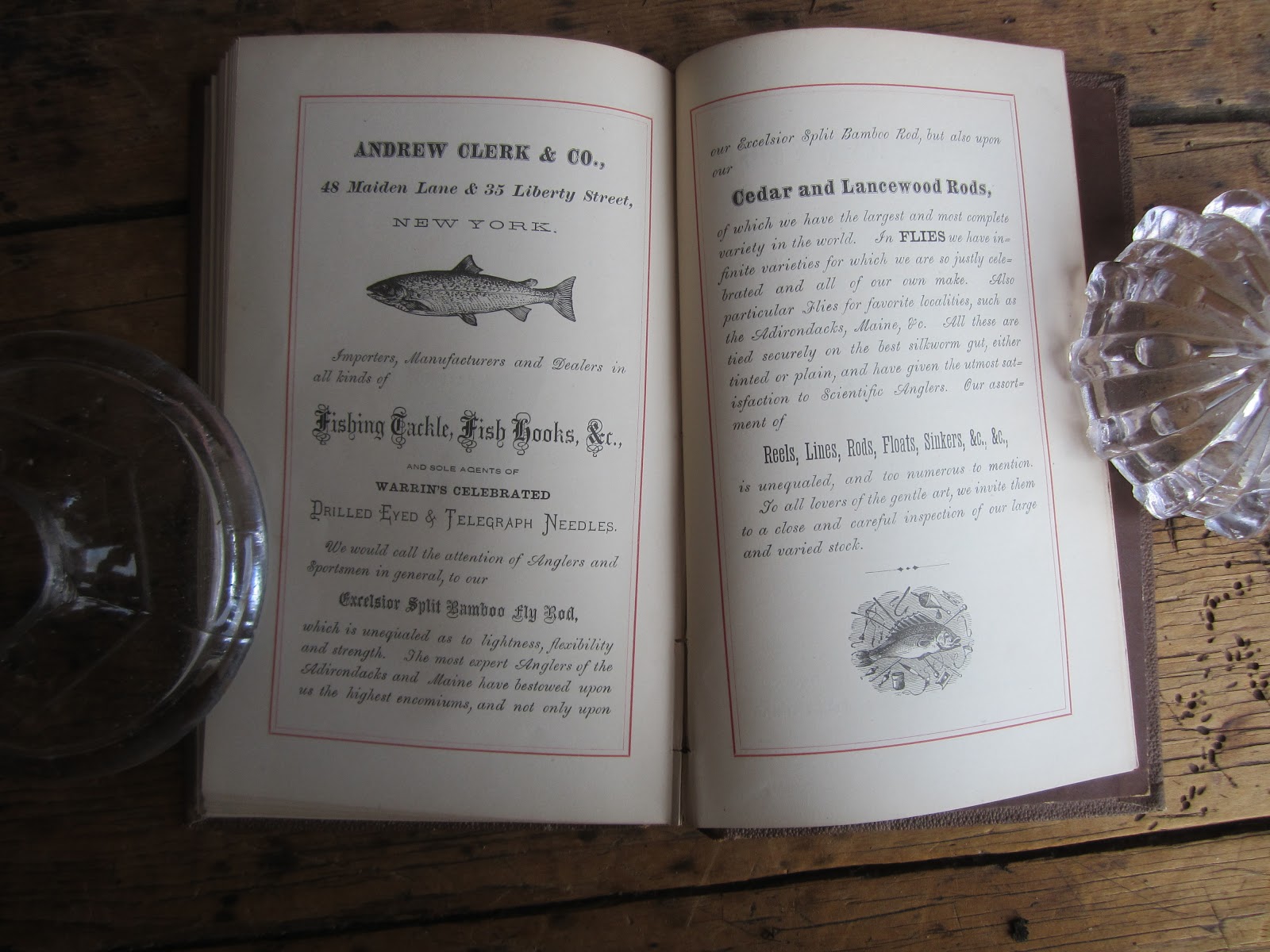
            The exchange process; the selling of a rare book, has numerous tiers within ‘a single rare book in consideration’.  I have been using the Allerton Brook Trout book as my specimen single rare book.  And I will continue to use it.  Two samples of tiers relating to selling include the largest tier treating selling as a whole stand alone skill topic inclusive of ‘ground rules’ (Part One).  I am not treating this tier.  I am treating a smaller tier (of ‘selling’).  This tier is ‘selling’ as it relates to rare book ‘valuation’.  Rare book valuation is the skill topic of this essay.  How I sell a book effects the value of the book.  I am dead serious about that.  I am talking about a lot of money.  And... a lot of less money.  All of this is vulgar... in rare book... ‘speaking of’.


            Rare book selling relating to rare book valuation... should you have a rare book... costs YOU money.  Every ticking second and every physical movement and... every mental affirmation and... it costs YOU money:  All of that.  So you figure how much it is costing you to ‘do this’ (funk around with a rare book you found) and be very accurate about that and
            Subtract that from the amount you sell your rare book for and... be very accurate about that and... all of this becomes an eye opener (I opener) causing... you to ‘leave the trade’ (quit being involved with rare books selling)?
            “GOOD BYE”?
            But most cannot even do this ‘that’ ‘very accurate’ so... they just loose money and are still around.  The simple finger math of all this?  IF... you sell a rare book for $2000. And it cost you, including your time, $1000 to do that ...how much did you actually ‘get’?  And of that ‘that’... you actually paid (let me suggest) $900. for the book so finger math that too and... “How much did you make on the book?”.  And then as to... self... was this ‘that’ worth “IT”.  So... aside from all the other topics I’ve written of in the six earlier chapters, this chapter topic... turns all that into... finger math of a ‘considered vulgar’ to ‘speak of’.


            Already vulgar to speak of... this ‘selling’ an old rare book... you’ve found... and... found a valuation... have I yet?  Well... lets just say that I have done all the valuation craft excepting this ‘exchange’ factor.  How do I do this... then?
            I have to make several leaps right away.  They are leaps because you probably cannot make them yourself.  I can and know well the ‘catching by my finger tips’ the far side of the leaps.  The first leap is that... rare book at hand (Allerton Brook Trout) I “HAVE” four or five ‘exchange’ (sell to) rare bookers ‘in mind off the top’ and... only need three.  This three is a staunch ground rule of all ‘exchange’ of rare books.  It is... that... IF... I offer for exchange (sale) a rare book at a valuation supported price... it should sell to one of these ‘first three people’ I “show” (offer for exchange) it to.  Again:  The book is NOT for ‘sale’ but to this critical proper first three ‘exchange’.  IF... after three ‘throws’ (offers for exchange) the rare book has not been exchanged (sold) then... PLAN “B” is required.  For I, this does not happen often for I have done my valuation craft (what this essay is about) very well using ALL MY SKILLS and... simply ‘step into’ the exchange realm with a well prepared offering.  And that most usually is “IT” for this whole process; my rare book is exchanged... I am done with that book and... very, very promptly, ‘moved on’ to the “next rare book”.


            How is this physically done... you ask?  I ...actually... carry the rare book (here being the Allerton) around with me... hidden from sight within briefcases... and I comment right here that what those briefcases physically are... IS a consideration of ‘selling’... for the more knowingly refined rare book seller or collector ‘knows’ and ‘looks at that’...:  The briefcase.  For more expensive books I use Zero Halliburton briefcases... all decades long used and ‘appropriately worn’.  After a few ‘exchanges’ a client EXPECTS the old rare book in consideration to be shown from one of these.  No surprise there right?  I go so far as to say that IF the old rare book does NOT come out of one of the Halliburton’s... it “isn’t rare enough’ (expensive enough) to... ‘be in consideration’.  Further... clients expect themselves to be a ‘left out’ if they are NOT shown a ‘for consideration of exchange’ from a briefcase during our ‘chance upon’ meeting.


            That’s a something right there isn’t it!  A ‘chance’ meeting.  That’s read right:  I do not make appointments to exchange.  No... all is by chance.  One sided chance.  OH I AM out there somewhere with the rare books I’ve found, valuated and have in the briefcases ready for exchange but ...it is up to THEY to find ME.  That I am around... especially... this is known... the more ‘serious (BUYER) you are’.  That means “most” do not see ‘anything’, see a briefcase or even... see me.  Just the “first three”.  That is defined as “freshness”.  That is a major ground rule topic of ‘selling’.  I’m not writing about that.  It is only ‘protectively’ considered for selling relative to valuation.  Basic ruling is that ‘if they are not gonna buy (‘exchange’) it... they don’t see it... ever’.  That actually creates an aura and myth... that is positive.  If a briefcase opens then there is going to be an exchange of a... RARE BOOK.  That is what all this is about:  The rare books commonly call “THE STUFF”.  This “all” is about the stuff.  Do not ever forget this.  It is not about, for example, the briefcases or me... or you.  It’s about the stuff IN the briefcases.
            I know this.  YOU have to learn that.
            “The Stuff” is the confidence that makes the ‘chance’ ‘briefcase’ ‘exchange’ ‘first three’ system work.  Most all lay viewers... even book collectors or sellers... do not even know of this system.  It is a ‘How do you do that?”.  I do this because I have a supported true rare book offered for exchange at a... usually... devastatingly accurate...
            “Valuation”.


            Taking all of what I’ve learned and pontificated before you of the valuation of the Allerton AND including the minutia that I spoke of and did NOT explain... and of which there is a lot ‘of that’... I very rapidly ‘value’ ‘my rare book’ at hand; the Allerton.  Determining that I have a two thousand dollar book that is not only supported as actually rare AND supported to be actually ‘desired’ by collectors... AND being in ‘collector grade’ condition too... with all that evident in scant seconds when I pop the lid of the briefcase... and the book is first glimpsed... (three seconds)...
            Then handed for exchange from the (vulgar) seller to the (vulgar) buyer... with clearly stated (vulgar) price... the rare book...  usually is exchanged (sells) in... one and a half minutes.  It never goes back in the briefcase.  The exchange is completed; (vulgar) payment is made.  Very little is ‘said’.


            What is the exact price and how is that ‘how’?  “How” is because for all antiquarian objects (including rare books) there are only ever THREE prices:  Too high.  Too low.  And ‘everything else in between PICK ONE’.  With the Allerton that goes like this:  At $3000. it is too high with $2500 being that too especially for an in briefcase low time and cost quick sale.  $2000. is a good ‘too high’.  Too low is $800. But probable at $1000. And that... due to rarity and condition may be ‘pushed up’ to $1200.  NOW working the ‘in between’ ‘pick one’ I start at $1800. With that low-backed by $1450.  That last sounds good on the tongue but it may be ‘pushed’ again due to rarity and condition so $1650.
            Do I say sixteen fifty or do I ‘SURE BET’ the sale at fourteen fifty?  Usually I’ll sure bet and sell for the quick fourteen fifty.  This is especially eased by the fourteen fifty being a price that may hold out against a counter offer.  For example here... $1250 sounds too cheap to get away with for the buyer... and TO the buyer.   It is easier... therefore... for both (vulgar) buyer and (vulgar) seller to exchange at a ‘fair’ barrelhead price.  All ‘is never spoke of’ and took a total time of fifteen to twenty minutes including ‘no additional cost or expense... for BOTH parties of the exchange


            Let us keep something straight here. NONE OF THIS take place unless I have a rare book ‘on board’.  It is the rare book... and only that rare book... that drives all this.  No rare book then no going for a rare book exchange.  I must have the rare book and ‘support that’ book.  THEN I have something to exchange.  A good rare book is not vulgar.  It is beautiful.
            To ‘rest assured’ for this rare book exchange, one has to have found a supported rare book in notably good (fine collector grade) condition offered very privately into a knowing rare book community with no fanfare and a clean commercial history that additionally is a delight to the rare book knowing eye... to do this ..be a rare book hunter and seller.  To me, the hard part is the hunter.  The vulgar selling is easy.  But:  Rare books are actually very rare and have to be found.  After going around trying to ‘find one’ for a few days... “good luck with that”.


Friday, February 2, 2018

Rare Book Valuation. How I Do That. Part Six. "The Rotten Apple"


Rare Book Valuation

How I Do That

Part Six

"The Rotten Apple"


            “Condition” is the rotten apple of rare book valuation.  “Condition” is not the rotten apple for me.  At all.  This is because I know very well what very good (“fine”) condition is.
            Looks like.
            Should be.
            And... “Is mostly not”.

            “Is mostly not” is mostly what
            Mostly
            “THINK” condition “IS”.
            Occasionally I have contact with a one who “feels” condition... but even that
            Is mostly
            Poorly done.


            What is fine condition to eye and I?  Mostly not ever.  How do you say that?  It is said to be a state of a rare book called ‘not breathed on’.  What that means, taking up my specimen rare book; the Allerton Brook Trout...
            Is that the observation of the book’s imprint showing self publication and self distribution of the book... strongly suggest the ‘probable’ that a copy or two... (and a guarded dirty secret I will get back to) could be found to be in “not breathed on” condition.
            Why?  How?
            Let me just look... at the book.


            If the book is about exclusive post Civil War Maine Woods Wilderness Brook Trout fishing by a small gaggle of rich, educated, urban, male, friends... who are the sorts of men who ‘have positions there’ (New York City, et al) and all nod in agreement that Maine Brook Trout fishing is a ‘that’ for them... and... they nod again that they know this...:  The production of the book; a vanity... is and was always intentionally for that ‘they know this’.  The book was intentionally ‘made this way’... including the menu for their dinner together... and was too... intentionally distributed this way... too.  This last meaning what?
            It means that of their casual social contact... and casual social contract... the ‘book about’ their Brook Trout Fishing... in Maine... in 1869... are single copies passed by hand to single receivers who... well... ‘take the book home’... properly... in gloved hand.  At home, the recipient’s den receives both gentleman and his book... protectively... in gloved hand.  He steps to his glass door shielded breakfront bookcase... filled with its ‘are similar’ books.  Opening a door... he then opens a small interior drawer and... right there then slips the Allerton Brook Trout thin tome... into that drawer.  Then he.  Closes the drawer leaving the book in total darkness.  Then he.  Closes the bookcase door and
            NEVER, EVER... ever-ever... opens, looks at, or ever touches that book; the his copy of Allerton’s  Brook Trout... ever again ever... and no one else either ever... excepting one day a century and more in that day’s future... I DO... and find the book (the Allerton)... and know what it is and ... also... that...
            This copy
            Is in
            “NOT BREATHED ON” (fine) condition.


            THAT is what a rare book ‘in good condition’ is to me and my exercise in ‘valuation’.  Most... common rare book folk... “do not know this (not breathed on condition) exists”.  Logically probably I DO KNOW that a not breathed on copy MAY exist and... thereby... do know to keep my eye and I ‘out for it’.  Here notice that ‘logical probable’ ...by feel and not by think... are used independently for rare book concerns such ‘is it a rare book?’ ‘how do I find out a book is a rare book’.  Add... ‘how much is it worth?’... valuation.
            Today’s topic is condition relative to valuation.  And I have established that ‘not breathed on’ is the most desirable condition state.  Right?
            Almost.


            My Allerton is not... ‘not breathed on’.  No... my copy is ‘near fine (covers) with fine and crisp interior being overall a ‘handsome, fine and crisp collector grade condition’ specimen.  It has ‘appropriate and minor rubbing, spine end wear, age toning and dust soiling for its age’ as its only flaws.  That is, the flaws are consistent with what the book should have from being an old rare book that is 150 years old.  Further... this condition state is ‘obvious’ to the knowing eye instantly (under three seconds of viewing).  “Everything is instantly noted as right and to the eye a... ‘wonderful’ condition.


            Now I go back to ‘not breathed on’ condition and the little ‘guarded dirty secret’ noted earlier.
            What this is... is that... if a rare book before one IS in ‘not breathed on’ condition one must ask ‘were there other not breathed on copies found with this copy; that there was a ‘remainder’ of the book found so an abundance (often hundreds of copies) have been found and are quietly being sold one by one ‘into’ the market.  I am saying that too perfect a condition is a warning shot button that I, using feel, have to push... alone with myself judging all this... very fast.  That is the dirty secret; not breathed on perfect ...remainder found... copies of a ... once... rare book.
            No remainder clutch of Allerton has ‘been found’ and most copies “show wear” so are not in that good of condition so collectors have to settle for the best specimen they can find...  if they may find any specimen.  This directs the upward price of Allerton to collectors;  They can get only the best condition they can find.  My copy, therefore... IS VERY GOOD for ‘valuation’ based on condition.
            Is not that nice?  But I already knew all this... and the rotten apple.


            The rotten apple backs into all of this.  If most have never heard of let alone seen a ‘not breathed on’ condition old rare book.  AND:  Have only seen old books in conditions that they have only seen... by their sort of here-there method of ...old rare book hunting and ‘looking at’...  This is the ‘they have’ set of ‘never been to a museum’ (Morgan Library in NYC, for example).  Never been to a rare book dealer’s exhibition (including vast numbers of rare book for sale).  Never been to the auction sale of a long prominent rare book collector’s collection.  AND... lowering the bar... never actually owned (bought for self study) and actual fine copy of a book ‘like’ the ‘books I want’... just to... look at...:   One quickly becomes a sort of beachcomber of an old book hunter; scraping the yard sales for ‘RARE OLD BOOKS’... while never having a clue that most all of that found rare book is in bad to very bad book collector condition meaning no one wants those books so they are not worth any money and are, politely titled “reader’s copies” which actually means ‘they are trash’.  BUT:  The vast majority of the old rare book hunters ARE of THIS.  VERY much unaware  ‘of the condition’ of the ‘old rare book’ they
            Think
            They found.
            The more rotten apples they find and keep as old rare books they found... the more rotten apples they haves.  And... as I said at the end of Part Five... I say and do nothing about this at all.


            The ‘condition’ based rotten apple factors dominates my contact with other rare book sellers and collectors.  The book... being a rare book found, is foisted at me as a good condition given.  “Valuable” and all of that craft (including cell phone research) is foisted at me right then too.  But...:  Condition (of the foist found and valuable rare book)... is never mentioned... at all.  And I really mean this.  NO condition qualifier.  No condition notice.  The book as it is in yard sale, thrift store, box lot country auction or flea market “rescue”... condition is... IS considered to be in ...condition is not a factor... condition.  Obviously to my eye it is a rotten apple... often gathered with other rotten apples.  ALL the books are rotten apples.  NO ONE HAS EVER seen-held-owned... a rare book... in ‘fine’ condition.  No... the rotten apple of an old book is with fellow rotten apples in their boxes of rotten apples of old books that are not valuable and no one wants them... simply ‘due to their condition’.  I do not even have to sniff them (‘the sniff test’)


            As my copy of Allerton is in a condition that supports a two thousand dollar book... I do sniff it.  I touch that base.  Quickly.  I now know my Allerton is ‘sniff tested’ BY ME.  Smell is part of ‘condition’.  Condition effects valuation. 


            Is there a lingering hot spot left to... ‘aware of’.  Yes.  Short and sweet, MY collector / dealer clients are, for the vast whole of them, too... rotten apple grade judges of a rare book’s condition... self supported.  That means that most whom to I sell ‘don’t know the difference’ of condition and how that ‘handbags’ on to valuation.  And I know this.  When I am “selling” an actual rare book.


Monday, January 29, 2018

Rare Book Valuation. How I Do That. Part Five. "Wait A Minute".


Rare Book Valuation

How I Do That

Part Five

"Wait A Minute"


            It would seem I could wrap things up?  I’ve assembled the components for a formula projecting a ‘valuation’.  Haven’t I?  IF... one copy is for sale on eBay for $575.00 and a second copy was at auction estimated a $1500. – $2500 but did not sell and a third copy actually sold at auction for $2128.00 and I cannot find any other actual copies of the actual original first edition of the actual old book BUT TOO... notice is noted that a ‘fish print’ is in the book with, too, a menu... whatever that’s about... and... apparently... numerous “nice old” (original to the original book) illustrations all within an attractive 1869 ‘publisher’s cloth with title in gilt gold’ original binding and... notice is noted too to... PAY ATTENTION TO THE condition OF THE BOOK and... THE condition OF MY COPY of the book and, of course, I never forget ‘divide by four’ (Part Three).
            The formula is actually suggesting we need to do a bit more... rare book seller... work... “before we get there” (have a valuation that ...SELLS the book.  A couple of dibs and dabs of “Wait a minute”).
            Oh... your just gonna keep your copy “anyway”?  No your not.  Why?  Because you do not have a copy of this book.  Why?  Because this book is ...in actual fact.... a RARE BOOK.  You’s gonna be rare book hunter along time before you “FIND” a copy of Allerton... ‘on the loose’ that you may choose to “keep”.  All rare book hunters will tell you that one will find a ‘rare book’ but it probably won’t be the old rare book you aspire to ‘keep’.  Anyway and again, the old rare books I find I aspire TO SELL...  You can ...and may... “buy mine”?


            So I go back over the ‘its’ again. Let me start with the eBay copy.  I remember reading the condition description ‘very carefully’ (Part Four).  I read it again.  SURE ENOUGH what I recalled reading is still reading the same:  At $575.00 this eBay copy for sale notices in minimal text that this copy lacks (is missing) the folding fish print.  An imperfect copy... to say the least.  “The least?”  Yeah... every info bit I’ve found on the Allerton notices the beautiful fish print of a Brook Trout.  So... like... if... YOUR copy lacks this plate... your copy of this old rare book (Allerton) IS an imperfect copy missing the most featured item and what does that mean for valuation to collectors?  IT MEANS “NO”.  Would you buy a car without its engine?  “NO”.  Got it?  It is “NO” no matter what.  Collectors do not want an Allerton missing the fish print.  Not even for a ‘divide by four’ $125.00.  It is... to a rare book hunter/seller like I... a... “NO!”.  No matter what including it now being obvious why this copy of Allerton is still sitting around on eBay “at five seventy-five”.
            My copy has the fish print in PERFECT CONDITION.  It has to have the fish print and I want it to be ‘perfect condition’ too... for a ...collector grade... valuation.  And, again, I know you ‘don’t have one’ (a copy).


            Skipping over the old ‘unsold’ auction listing because it is vague in its details and I... have the ...very detailed (including the fish print) descriptions (note plural) and illustrated... Thompson Sale catalog listing... I... very carefully purposely slowly patiently and with my actual copy at ...and in... hand I... yeah I even have a magnify glass too for that is so ‘tweed jacket mustachioed pipe smoking old school rare book seller...
            Here within that catalog entry are all the noted tid-bits I need to know of and find ALL of the features of a collector grade copy... including the menu... and
            “Condition”
            This last I’ll get back to as a stand alone valuation issue.  Right now I spend my time ‘checking out’ the proper completeness of my copy “compared to Thompson (the Thompson copy)”.  It (my copy) does compare ‘complete as issued’ so mine (my copy) may be ‘seller offered’ as ‘being identical to the Thompson copy’, a seller to collector assurance that is VERY... GOOD to be able to amend to MY COPY.  This sort of full bore comparison quickly makes ‘good sense’ to any full bore rare book hunter because it makes... good cents... too.


            Let me make a strong suggestion at this moment:  READ THE BOOK.  Reminding again that all of this rare book realm is about books and reading... why not now that one has actually purloined to be at hand an actual rare book... READ IT?  Question mark.  Before that... task... one must accept, acknowledge and ...actually do...; inspect the ‘your rare book’ PAGE by PAGE to be, well, at a ‘least’, sure that ALL of the book is... ahhhh.... “There”.  This is called ‘collating it’ and means that, as an owner/seller.... YOU have looked at (INSPECTED) every page ‘to be sure’ “MY COPY” is “all there”.  The way this ends in rare book seller land is a purchasing collector will ask... ME... “did you (I) collate it?”
            “Yes.”  That’s a barrelhead top guarantee that the book is ‘all there’.  It is never mentioned again... in professional settings.  Now... on the wait a minute... a collation “done by you” is considered worthless and a “I have to do that myself (before I’d buy the crummy rare book you found)  Nothing personal:  Just a professional ‘must’ and you ‘can’t be trusted at that’ (collation of anything).


            While I am looking at each page... the suggestion of actually reading the book is denoted and as this rare book... like so many rare books, has a ‘very thin’ amount of text, the... to actually read the book is NOT difficult to do.  Actually it is most often FUN to do.  For example... a first edition of Robert Burns’ first book of poetry... is a rare book that is too a (actually not that) thin book so if one has one of those, likes Burns and likes all the rare book banter about Burns too... to actually read, yourself, the actual first edition copy of this “your rare book I found”... IS FUN.  Unless you are a really greedy rare book seller who feels this is all about money and not about reading books and... in most cases... these types cannot read ‘anyway’.
            Stepping back a moment here I call attention to the ‘very thin’ above.  The economics of the first edition – first book... at the moment of creation commonly was done with very small budget so... to no surprise a great many ‘rare books’ were published (and self published) on very skimpy budgets so that the resulting rare book today is very often a very thin rare book.  That’s a hint for you:  Many, many true rare books are truly thin books too.  It is okay to not embrace this hint because you’ll ‘find out anyway’ if you ever go anywhere ‘in rare books’.  When I look at the spine ends on your book case... I am looking for very thin spine ends.  The more thin books I see, PROBABLY the better collection “I am looking at” and... I have not even touched the ‘your books’ yet.  I won’t be touching your books ...if they are too thick.  But, of course, this has nothing to do with rare book valuation.  Or does it?


            The Allerton... IS a thin book.  To no surprise to me.  So as I am ...reading it... (a possible two thousand dollar book I own and will be selling)... I am looking at ALL the details that ‘make’ up the book.  “Make up the book” is not ‘valuation’ of the book.  Make ups are different critters than value.  I will note some ‘make ups’ in the Allerton but I will not explain them:
            Cover with title in gold
            Spine end.
            Title page
            Preliminaries
            Imprint
            Published (here published by the author}
            And ‘sold’ by the author
            WHERE (New York)
            Dates (of occurrence and publication)
            Copyright
            Full page prints
            Printed textual illustrations
            The text; titles and subtitles
            The fish print
            The menu
            Additional leaves (pages) of ‘advertising at the end
            Rear cover blind stamped with title.
            And more.
            While I am reading the book (Allerton) I am also very carefully ‘looking at every page’.  Just for me.  “This is fun”.  Remember Rat and Mole: ‘Nothing is so much fun as messing around with...’ Old Books.  If one is not a ‘totally there’ with this old books – reading them... the ‘I want to be a rare book hunter’ and ‘make a lot of money doing that’ is going to have a perpetual crass or trashy taint to your actions with it (old rare books) and... the most professional ones (rare book people) WILL quickly note this ...without noting it to you... and... then you will be professionally qualified ‘evermore’.


            Let us touch this point.  I do not ever talk about any of this... to anyone... for any reason.  That I am a rare book seller prowling to purloin the finest rare books I may find... is never spoken of or shown... off.  No.  Never.  You’d never know.  Never ever know.  A playing dumb is the least of it.  I prefer to play ‘not even there’.  Most rare books I find are found by I in the hands of a great ‘don’t know’ and I assuredly follow through by making sure their transactions with me never ever suggests in anyway that an ‘old’ ish book is ever in anyway a true old rare book ‘I found’ and “valuable’.  And:  If you are a rare book hunter I prefer that YOU feel that I ‘don’t know’.  ANYTHING.