Wednesday, January 20, 2016

The Silver Twin's ...Place... In New England Decorative Art - Part Ten - "Triple Jump"


The Silver Twin's ...Place...

In New England Decorative Art

Part Ten

"Triple Jump"


Returning to the ‘frontier’ and updating the ‘hiatus’ (Part Nine [A]) of the Silver Twin’s Place... I briskly summarize:
            Take down (shed)
            Collapse (barn) (“dangerous”)
            Closed up house
            Burns flat.

            No real surprise there:  “Awful
            OLD place
            It WAS”.

            And add in the fifty years of “closed up” after the “LAST PEOPLE TO LIVE THERE” (the actual “Silver Twins”).  The “moved them out”.  The “cleaned it out”.  The “got in again” (Part Nine [A])... and:  All the pieces fit.  Right?
            The old wooden sap spiles (Part Two)... et al... I purloined, myself, the ‘best I could’.  And I figured antiquers had been knocking on that door for
            SEVENTY-FIVE YEARS (starting 1920’s)
            For sure and that probably having a nineteenth century ‘dealer’ knock on the door
            Too. 


            Yep...:  The place
            Had been ‘gone through’
            Before it burned
            “Flat”:
            “RACCOONS BEEN LIVING IN THE ATTIC ONE OF ‘EM COME OUT ON FIRE”.  I wasn’t even around for it (the ‘burned flat’).  It had been a solid decade since I even ‘last drove by’...
            Up over Silver Hill.
            I figure.


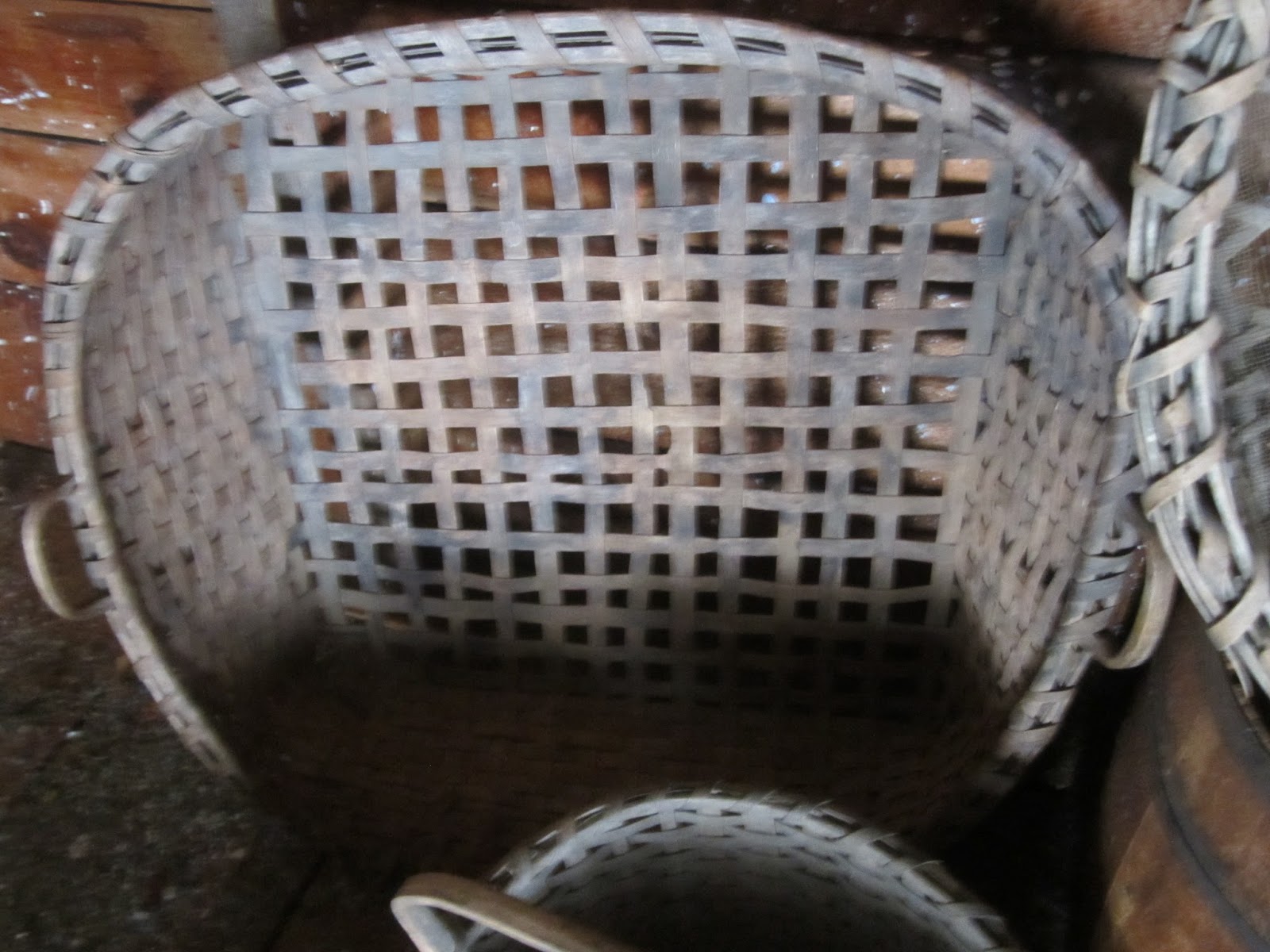
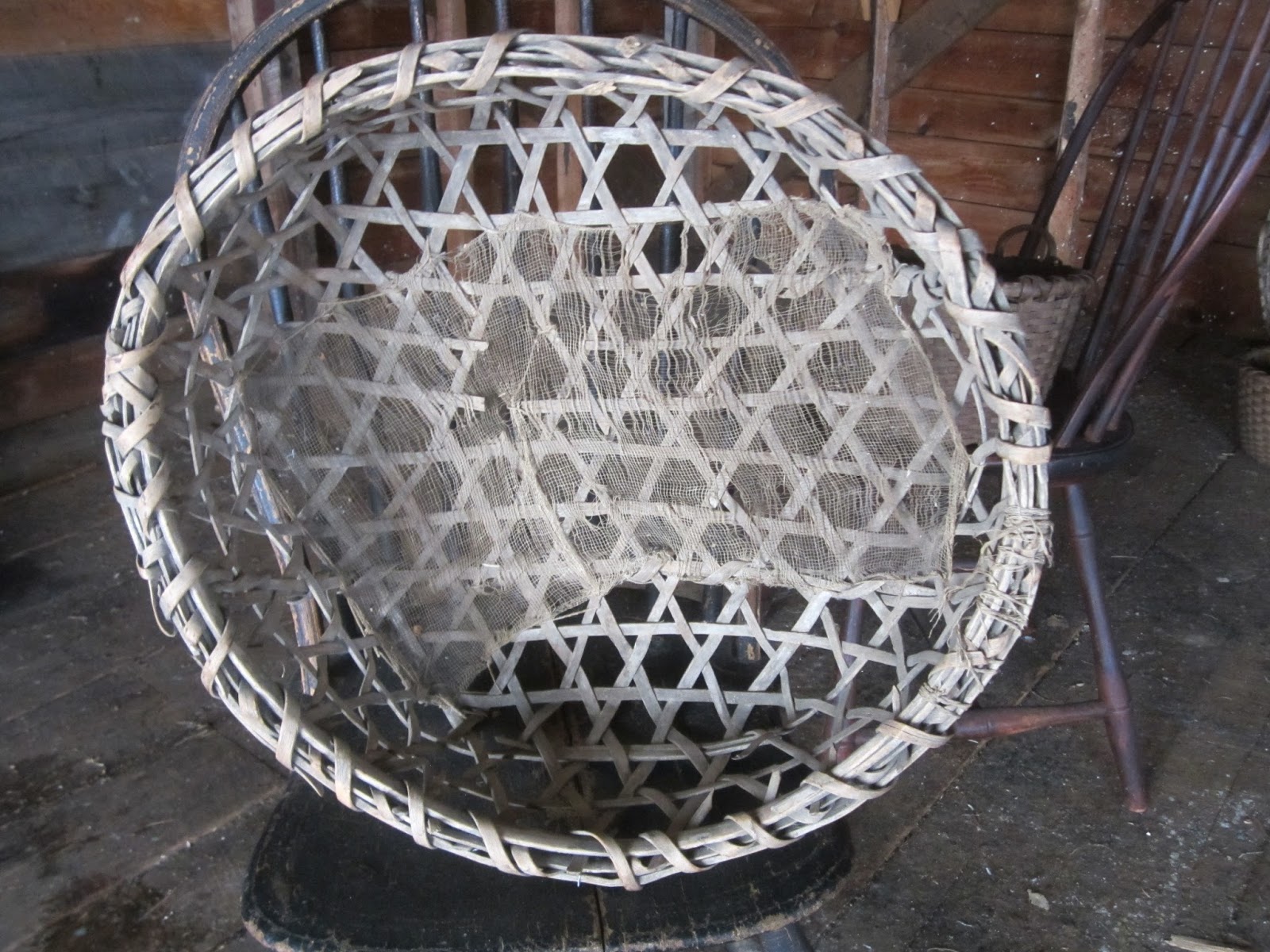
            Before I ended my ‘special events’ visits I had brought forth my ‘qualified quandary’ of the Silver Twins hoard of old New England decorative arts and have written out how that ‘carries’ using their old broken farm baskets as a specimen example of that aesthetic.  And the consideration (‘qualified quandary’) of ‘setting’.  Too.  Then I noted my interest of ...did they (the Silver Twin’s Place) have what I called a “stoic old New England crude primitive design jewel(s)” ‘in there’ that I found” (end Part Nine [B]).
            Before the place burned flat.
            This last (‘burned flat’) vanquishes the second consideration of the aesthetic of ‘qualified quandary’ of ‘setting’.  In case your trying to keep track.  It’s just the “grown up” there now.  No structures and one would ‘never know’d they’d been one’ (a Silver Twin’s Place).  Or that there ever could have been a consideration of ‘qualified quandary’ of ‘setting’.  Too.  JUST SOME “nice” “wildflowers” when “you drive by”.  So now that I have set up the cracker barrel with the checkerboard on top, let me do a couple of triple jumps of the aesthetic of the Silver Twin’s ...Place... in New England Decorative Art... and then get out (end this missive).
            Leaving you to drive by the wildflowers of all this
            On your own.


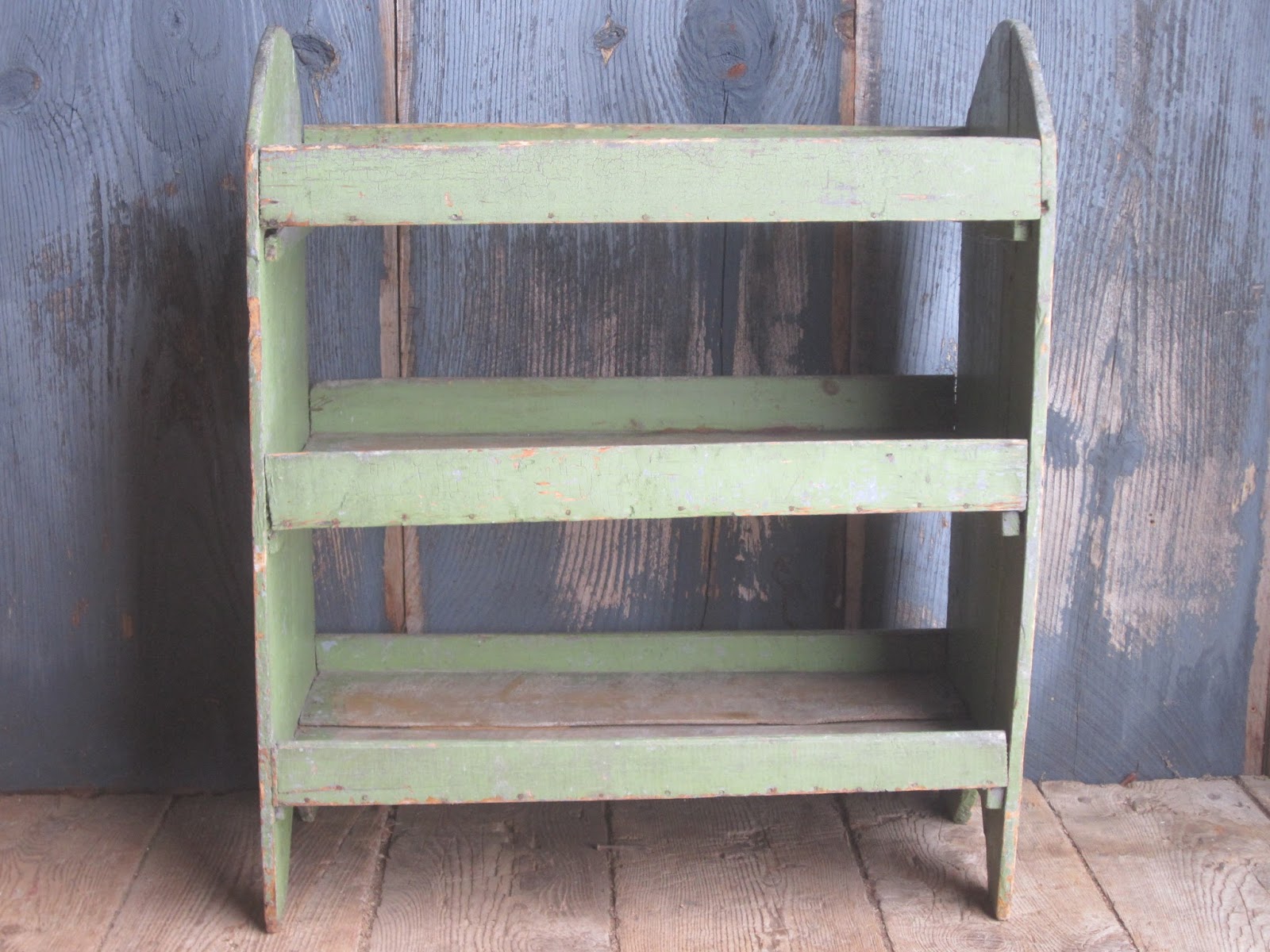
            I cannot walk into our kitchen without noticing a ‘crude’ ‘primitive’ “shelf unit” set up against the “(black) soapstone topped” “island” in the center of the kitchen. “Flushed” up against the island in an appropriately worn old “puke” or “baby shit”*** green paint is a light as a feather ‘tombstone ends’ shelved storage unit handmade from mid nineteenth century packing crate (thin ‘finished’) boards.  This unit has three ‘older’ paint ‘colors’ under the ‘green’ and retains the ‘never painted’ inner shelf boards that were ‘always covered’ (with loose paper?).  It measure 30 inches wide, 34 inches tall, 14 inches deep and ‘come out of’ (I bought it from) the Silver Twin’s kitchen. It was ‘covered’ (shelves filled full) with ‘kitchen stuff’ when I spied it and bought it... all... as a unit and ‘got it out of there’.  My wife took it off of me when I got home.
            She wiped it down.
            Put it “there”
            Its been there ever since.
            She likes it.  I like it.
            It’s got some of her cooking crud on it.  Nothing overloading it.
            That’s not what this is about.


*** These are antiques dealer slang titles for this 1900-1930’s color.


            It’s about the “a stoic old New England crude primitive design jewel(s) ‘in there’ that I found”.
            From a perspective of (and only of) old New England design this (shelf unit) ...form... stands here as a singular fabrication of actually difficult-to-create (especially considering the light thin boards)... function intentional... balanced in size and weight... slightly embellished (tombstone top ends) made ON THE (Silver Twin’s) PLACE... and drawing from no other inspirational directives other than ...old Maine shed door barn yard design AND a few “from the wife” expressions of (design).  She “I need” and/or “want”.  There it is; designed, made, used.  No one... anywhere else... ever.  Except, of course, it’s my wife’s NOW.  After “it” (the homestead) “burned” flat.  Let us not make too much of this for it is
            ONLY WHAT IT IS...
            But that ‘what it is’ IS a ‘pure strain’ of ... old New England Decorative Art (design).


            Do I have a source of evidence respecting and supporting this ‘pure strain’?  Yes.  I return to the Concord Museum (Parts Seven and Eight).  I have used it twice already and so return to the same museum and the same reference book for their collection to find... a very special stoic old New England crude primitive design jewel.


            Collection catalog number “15” “Desk” shows a “one of the humblest in the collection” (from a design perspective).  It is also a “most historically significant” (heritage) too.  The latter is that the desk, pencil dated 1838, was one of a set (it is believed) of identical desks constructed and... painted green... that were locally fabricated for the Thoreau brothers for their school of that year (1838).  The school failed but... this single desk... survived dispersion by being retained by Henry David.  He took it to the hut at Walden Pond and there wrote, including the ‘journal’ of WALDEN, on it.  When he left Walden, the desk left too and reappears at the head of the stairs in Emerson’s home and was there still used for writing by Henry David.  Eventually, through Thoreau’s sister, the desk passes to the Museum.  Its heritage is impeccable?


            It’s design is... nothing.  True... it is but a green painted ‘stick’ desk; a form of that form (stick furniture).  But... divinely merged with Thoreau at Walden, particularly noting the philosophic heritage (principals) of Walden... the desk and it’s design... ARE consistent with a Walden – Transcendental vision... and
            That vision
            Points at... too... the Silver Twin’s ...Place... and its decorative arts.  Is not the essence of Walden written on this desk the very celebration of the Silver Twin’s New England homestead’s simple ‘self reliance’?  Its (the Silver Twin’s Place) hand carved wooden sap spiles... are an intellectual vision?  I certainly do not miss the connections and... hold them to be true.  It is so true to I (us; my wife and I) that it (this intellectual vision) is in our kitchen... too.  We seek it, find it, save it and protect it.  Here, though, the Twin’s kitchen shelf unit, fabricated as a ‘pure strain’, becomes a splendid third ‘triple jump’ of this aesthetic when wedded to Thoreau and his desk.


            A step higher?
            Although that comparative unit works fine for buttressing the ‘stoic old New England crude primitive design jewel’ object I have been harping about... so it may become the ‘THE’ “...place...” of New England Decorative Art contributed by the Silver Twin’s homestead...
I do
            Personally
            Like my ‘that’; the “MINE.... THAT”... a little bit more ‘hardball’.  That means, principally, I like it ‘older’ (Colonial settlement era) and crafted ...tougher... meaning a little more past a ‘your not gonna just FIND THAT’.  Object... so...:  What I bring up as ...triple jump... support and evidence for this ‘step higher’ is... an old
            Barn door.  Weather beaten old relic abandoned moved tossed pitched nailed up dragged here and there used again and again but always the managing to be the same:  A Barn Door.  This one... “Jesus I don’t know WHERE it came from on that property” but it was
            STILL THERE and... I said “Oh wow” right away and... got it out of there.  It wasn’t attached to anything when I found it but it had definitely been ‘put away’ and ‘left alone’ MANY times and for a LONG TIME.


            What makes this old door remarkable (jump number two) (jump one is that it is ‘of’ the Silver Twin’s Place)... is that the construction of the door is ‘insanely’ fine considering what it is (a colonial era rural New England barn door).  WIDE... THIN... handmade... locally mill sawn ...again noting ‘thin’ wood thickness for accuracy... White Pine ‘finished lumber’ assembled to be a ‘barn door’ with ...individually handmade one by one-one-at-a-time wrought iron ‘rose head’ Colonial era nails... THERE (at the Silver Twin’s Place.  And then “hung” (used as an exterior door) for
            Two hundred and fifty years (inclusive of all usage variables including “put away” and “left alone”.
            Including I FOUND IT.
            A weather beaten gospel according to what?
            It is, ‘according to what’, “just there”.  That is its pure strain.  Designed with drastically difficult material to procure at its construction date (1750-60) with these drastically fine materials then used, this pure strain stays active as its ‘it’ ever after and EVEN AFTER I DRIVE OFF DOWN THE HILL with it in the back of my truck.
            With it.  It is an old barn door.
            Right?


Or is it... an it... as one views an oil painting; a composition on a flat surface?  Is it a ‘painting’?  I ask.  When I study the ‘inside’ side and trace the shadow of the long removed ‘original wrought iron hinges’... is that an obsessive painterly detail that only an artist would care about.
            Notice.
            And find... to assure
            That this old barn door is but an old New England decorative art... I found... as part
            Of the Silver Twin’s ...Place...
            In
            Old New England Decorative Art?
            “Who was the artist?” I’m asked.
            “The Silver Twin’s Place”.

     The End


Saturday, January 16, 2016

The Silver Twin's ...Place... In New England Decorative Art - Part Nine (B) - "Qualified Quandary"


The Silver Twin's ...Place...

In New England Decorative Art

Part Nine (B)

"Qualified Quandary"


            Possibly by now (in this discourse) one needs to have one’s art diaper changed?  Yes the aesthetic I said I ‘wanted’ is inclusive of worn from usage ‘broken’ baskets.  I just said (Part Nine [A]) that this state of ‘old basket’ should be there on a true “very old” New England homestead ‘found’ ‘antique’ basket.  The basket was made at the ‘place’.  Then it was used at the place.  Then it was used so long it was ‘worn out’ (not ‘broken’).  Then it was ‘put away’.  Then it was left alone.  Those last were with (all?) the other baskets (ever?) made at... in this incidence... the Silver Twin’s Place... UP in the FAR BACK  (“behind” the hay) of the second floor hay loft of “THE BARN” (Part Nine [A] again).  They gathered there and remained there until I
            Found them, KNEW WHAT I FOUND and... purloined them... for ‘a buck apiece’.  And again I re-state:  In the antiquarian ‘collector’ realm... the baskets I am highlighting are considered to be “broken” and “no good” (of no monetary value) even though I just told you that they are, in fact, the very true essence of the aesthetic of
            Old New England Decorative Art ... of the Silver Twin’s Place.
            “Jesus is that LAME or WHAT?”


            It is lame and it is ‘or what’.  I start with the construction of the basket.  The materials; rived splint wood, preferably Ash, was located and procured on the property first... and then ‘prepared’ by ‘soaking’ (in the homestead’s spring water run off “stream”) and ‘beaten’ (along the grain) into ‘rived’ strips. Then these strips were put away until “winter”
            During winter (“the dark period”) the strips were ‘brought out’ to the fireplace sitting area... a few at a time.  “Soaked” (in hot water), the few strips were ‘prepared’ so that after supper, in the dark, before the fireplace, seated, with the rest of the family including all children, babies, pets and visitors... a PERSON (male or female of much varied ages) MAY ‘make a basket’ “over time”.  One of many?  One of a few?  One of one “ONLY” “EVER”?  He?  SHE?  HER?  “Yes Dear you doing a FINE job”.  Speaking of one man making one basket once with his whittle knife... or SHE with hers... please be sensitive to understand that this one maker making... one rived soaked wet strip at a time...is IN NO HURRY in the fireplace light with the cold dark winter howling ...  Be YOU THERE... for this... slow, deliberate process?  Can you... may you... see this ...old New England design form... a ‘decorative art’... emerge....:
            EMERGE.
            From this ponderous crafting.  Slow... steady with a fine hand or rough hand, fine skills or rough skills... marked ability or ... no ability...:  Maybe a one man makes only one basket for his usage once during his whole lifetime of whittling in the fireplace lighted cold dark...
            Or maybe he makes five (baskets).
            “Ten?”
            SHE makes...
            TOO?


            I feel (I think) I have explained this ‘making’ enough to ‘establish rarity’.
            Have I?  Do you ‘get it”?
            Then... in the spring light... “usage” begins... for real.  Forever.  “USED” the hand made whittled splint wood ‘basket’ (of whatever form or intended purpose) is... THAT.   The basket is used.  Ever after... including “AFTER” it is “WORN THROUGH” and then “WORN OUT” and then STILL USED and then... after FOUR GENERATIONS (six or seven?) of same family use of the same basket in the same way for the same homestead...; the “worn out” (“BROKEN”) basket is “saved” by being ‘put away’ and ‘left alone’ with all the other “SAME” “BROKEN” baskets ...on the Silver Twin’s Place... in the ‘upstairs’ at the back of the barn behind the hay...
            Okay they could have ‘burned it up’ but, like... are ....YOU gonna hand make a whittled splint farm basket and use it for four generations and then
            BURN IT UP?


            That explains that doesn’t it.  And it explains what happens next.
            I purloin the baskets... because I KNOW ‘what they are’.  I know what they represent as an old New England Decorative Art ...found... as being derived, crafted, used and preserved ...on the Silver Twin’s Place.  I know their aesthetic.  I want that.
            I do not care if you do.
            “Jesus” is that LAME or WHAT?
            It is lame and it is ‘or what’.


            The first time I became an antiquarian involved with the aesthetic and commercial realities of ‘old (broken) baskets’ I was very young in the trade.  I “ahhhh....” was in Junior High School (“middle school”) and was, without conscious efforts ‘getting’ (not buying) old ‘broken’ New England homestead “baskets” that “nobody  wants”... so... like... I put them in this old horse stall in my grandmother’s barn and... like... did nothing... and... like... the stall filled up.
            One day I was kicking cans down the road of antiques dealing with this older dealer (male) and we went by the horse stall and he says ‘them baskets’
            “FOR SALE?”
            “Yep” boom bang and I gave a price ‘for all’
            In the stall.
            “I’ll buy them.” He said.
            “Why?” I said.
            “I like them.” He said.  That was the first time I ran straight full bore into ‘this aesthetic’, the knowing about it and the ...
            “I care.”
            It didn’t fully register for a decade or two.  I did fill the horse stall back up.
            And emptied it (sold the broken baskets).  Again.  And again.


            The next time that anything really poignant about this old worn basket thing and its aesthetic relative to New England Decorative Art... happened to me was when I... you remember me speaking of this (Part Three)... visited a gallery show titled “American Design in the Rural New England Home”.  “I... I.... I’s” in the door and OVER THERE in the gallery occupying a whole ‘far corner’ was a mobile of “ahhhh....” hung free for air puff motioning; dancing ... old New England splint “FARM BASKETS”; an open sculpture moving in space and time of
            Old New England splint farm baskets... a New England... ‘design form’
            Presented... with no comment (NO COMMENT).
            At all.
            I, of course, “loved that”; seeing ‘them’ ‘that way’.  Dancing in air. Yeah but ahhhh.... I’d seen the huddled masses yearning to be free at the back of the old hay in the old barn too so... like...:
            “Qualified”  Okay?  Am I in the barn... or am I in the gallery?  That’s... part of the aesthetic... too; the... ahhhh... ‘setting’.
            “Quandary?”
            No.  Why bother.  I like going in old barns.  Galleries showing that (what I find in old barns) are very-very ‘few and far between’.
            And that is where this rests.  Right now, decades later:  “Qualified” and “Quandary”?
            No.  I have just gone on without it... but know it.  “It” is the ‘whole “that” outside of “this”’.  The ‘outside is the ...unknowing – not seeing (sensing) this aesthetic or, as they say:  “It’s no good.  IT’S BROKEN.  TOO BAD.  HUH.”


            I’m really alone with all of this most of the time.  In the back of the old barns.  The Silver Twin’s used ‘broken’ basket hoard?  That was what I (we) call ‘a rescue’.  I mean... they were just GOLD to my eye but I know how it goes; “Gotta GET BACK to decorating my LIVING ROOM”.
            What is your living room anyway?
            Maybe I had a living room at the back of the Silver Twin’s barn... just for a handful of old New England seconds?  Can you see that?  Or is it too... “dirty broken baskets you SELL THOSE?” for you?


            So the next thing that happened to me is to find out that I am
            NOT ALONE
            In my sense and appreciation of this old New England aesthetic.  It is a sense of a design school that, found in old, put away, left alone and abandoned New England.... that offers a very singular view of old New England Decorative Art.  It is a ‘very rock’ of the old (colonial era) New England ‘pioneer’ (Emerson – Self Reliance) ‘decorative art’.  The ‘crude’ ‘primitive’
            Or is it ‘stoic’ ‘jewel’.  Does that find expression?  And... did the Silver Twin’s Place ‘have one of these (stoic old New England crude primitive design jewels) ‘in there’ that I
            Found.