Showing posts with label Below Zero. Show all posts

Tuesday, December 12, 2017

Sealing the Foundation of a Colonial Maine Homestead With Balsam Fir Bows


Sealing the Foundation of a Colonial Maine Homestead With Balsam Fir Bows


            This is an annual domestic activity.  It is not a task.
            “Really?”
            The lethargic of the seated homeowners and their passive
            Pathetic energies merge with their misappropriated sound stance that they;
            Doing nothing
            Therefore know what a task is and
            This (sealing the foundation of a colonial Maine homestead with Balsam Fir bows)
            Is one.
            “Really?”


            That’s done.  Or is it?
            No.  Restating:
            MOST PEOPLE... “need the exercise” (so spoken), avoid physical activities and title such actions as this (sealing the foundation of a Colonial Maine homestead with Balsam Fir bows) as ‘work’ “to be avoided”; this annual task (sealing the foundation of a Colonial Maine homestead with Balsam Fir bows).
            “Are we done with this now?”
            NO:  Your still just sitting there in front of the lost titled “boob tube”.
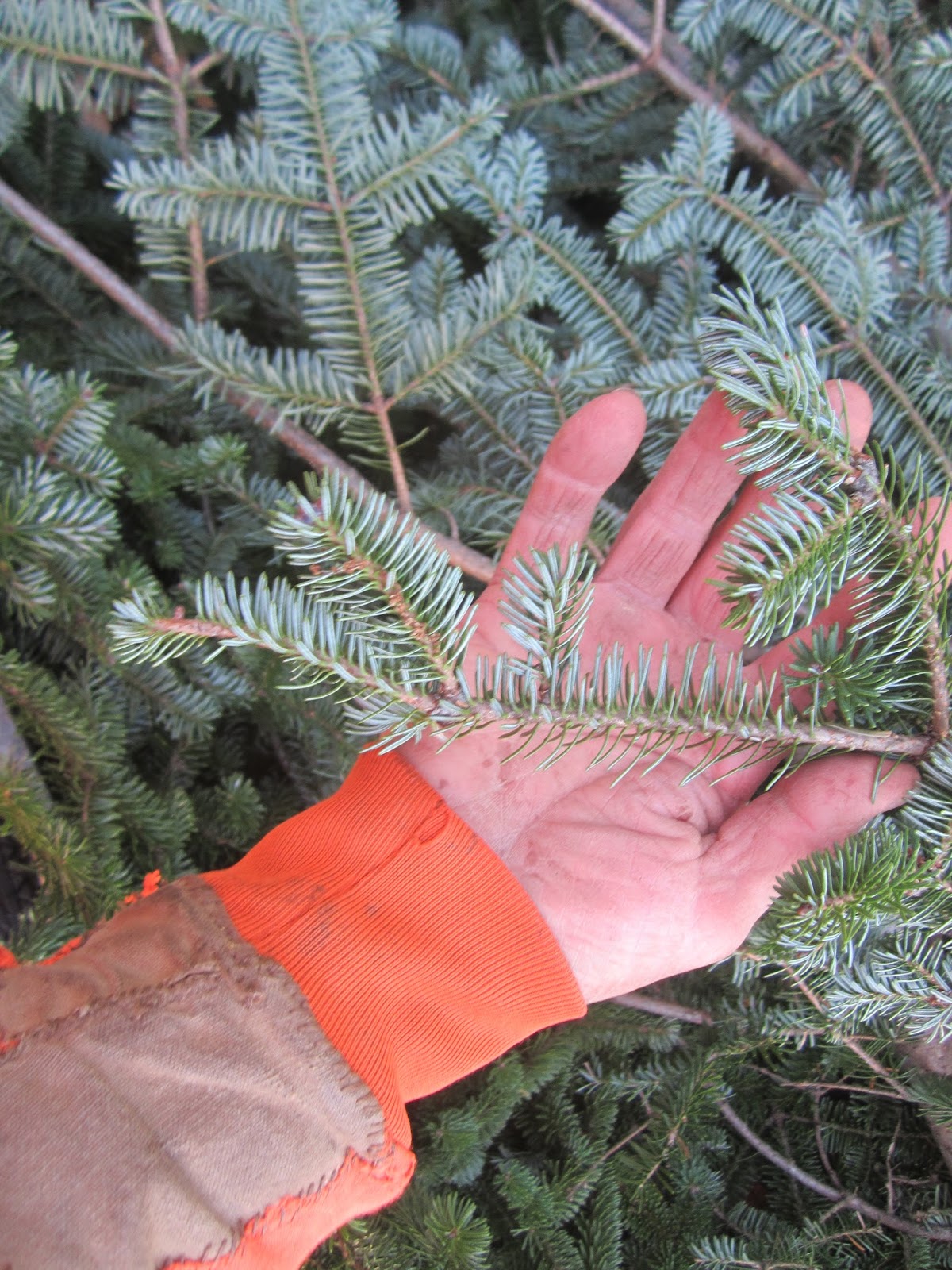


            I, in the Maine November air, am “out in the woods”  We have forty acres of “woods” (“forest land”).  I am looking, as annually, for Balsam Fir tree “blow downs”; large and larger trees that have recently “BLOWN DOWN”.  Preferably blown down since the first of the month (November).  There is always at least one.  And I find it.
            I want a dream tree; forty five feet tall once standing on a high rock ledge “overlooking” towards the sea.  A ‘been there for decades’ thick top bushy mess of dense packed wonderfully smelling long, long, long wind worn mashed thickness of tiptop leafage that came crashing down some windy night.  And nobody saw this.
            But I, hunting for it, find it in the November afternoon light and...
            “It’s mine”.
            I actually found two smaller (shorter) ones this fall.  That is not uncommon.  But... it means I have ‘enough’ ‘bows’ to do ‘everything’(seal the foundation of a Colonial Maine homestead with Balsam Fir bows).  “And more”
            “And more” includes covering small Rhododendrons from being eaten by the winter’s starving deer, covering the heather bed on their exposed rock ledge, covering the Pachysandra along the front door’s path and... making a wreath to hang on that front door.

All of this from blown down Balsam leafage ‘hauled’ from the forest?  Just giddy and dizzy I am from the pungent airs wrapping my clothing.  “Almost pitch covered” that smell.  “Isn’t that so?”.  So armed, literally, with the fragrance it becomes my seasonal utopia; my estuary of air chasing my every action.


            The action is the ‘work’ and ‘task’ I noted earlier.  Yes:  I smell like that from doing something and that something is hauling cart loads of thick Balsam Fir bows... for days.  Oh yes that IS a peril that wishes the holiday’s away?  Yes is it not:  To smell strongly of Balsam Fir for late November days... as I “work”.


            I have always been ‘the Balsam Fir’.  And never anything else including the “fake Christmas tree’.  A lot (all?) of ‘that stuff’ has come along in my lifetime.  I missed it; these innovative adoptions that wantonly foist the November / December holidays with “PINE BOWS” of the ‘all sorts’.  I have never bought a Christmas Tree.
            My parents did; along the roadside with the white light bulbs.  I remember that very clearly.  Always the same and always “a Balsam Fir”.  That last was ‘done’, not spoken of.  My father’s eye for a ‘good tree’ was savage.  No overruling or second suggestion was ever needed; Balsam Fir is New England Wasp.


            My family, in our Christmas Tree lifetime, cut ours ‘in the woods’.  No “this one no this one” stuff.  We cut a young Balsam Fir that just ‘touches’ the (1750) Colonial Maine homestead’s ceiling (82”) without considering the old “not level” floor of Colonial boards.  Our “tree” just goes “up”.  The real action is around the outside foundation line of the house.  We... “ho, ho, ho”, decorate that.  Carefully... but not obsessively.


            While somewhere along the way a wreath is made for the front door, the real outside Balsam Fir bows sleigh ride starts at the coldest corner; the northeast, and covers the whole homestead’s foundation line; the line where cut stone (field quarried granite) contacts the ‘old wood’ (sills) of the actual old wooden box of ‘house’.  “Around the house we go”... what?  We work in both direction from the corner to reach its far point sunny friend corner at the full opposite of the ‘cold corner’.  Carefully and considerately done this takes ‘days’ of ‘an hour or so here and there’.  Unless an early fall blizzard is coming “TONIGHT” there is “no hurry”.  Relax and enjoy this task... this work.  Have you seen what other people do with their time on earth?  One is much better off with ‘foundation level’ Balsam Fir bows.


            Originally I laid old rough cut pine boards against the foundation line and then buried those under Balsam bows.  The intention is to prepare the foundation line to ‘catch’ and ‘capture’ the snow.  This crusts and freezes in place so ‘seals’ the line “from the wind” (and cold).  Today... and the last decades... large sheets of plastic have appeared in neglect and ‘don’t want’ at household clean out sales.  These, acquired for ‘pittance’ I cut into four foot wide (sort of) strips and tack them with small shingle nails along the foundation line.  I then support these placements with scraps of pine poles and ... in actual fact... 1830’s handmade bricks “made right here” I was given when a neighbor took down an old chimney of an 1830 addition “butted onto his cape”.  They are my collection.  I show them around the foundation when they are not in actual use (for this annual foundation sealing).


            Just for the record I will notice that this ‘old handmade brick’ is “quite nice”.  Handling them each season increases ones sense of what an ‘old brick’ may be... could be... can be... and... can be a part of ones aesthetic AND Colonial New England aesthetic should one choose to include ‘old bricks’ in ones life... style.  They do not sell them at box stores and one... must keep the eye out if one becomes an ‘old brick hunter’.  They are around but are rare in piles. Most are found in small gathers and, of course, the “OH!” discovery of a  “very old” lone lost brick... one promptly purloins. That may make one giddy with delight.


            As the plastic with the pole pieces and brick are placed along the foundation, the Balsam bows follow behind being placed to fully cover this plastic shield.  The more and the thicker, denser the Balsam bows the more abundant the cover and... the more ‘full contact’ the bow man has with the stink and smell of these ...wonderful holiday wonders; the Balsam Fir bow. I find myself puttering and dawdling in the November sun with the bushy bundles.  I use a pitch fork to place the bows.  A pitchfork is my friend for it removes a lot of ‘bending over’.  Upright one always feels in command of the task... the work... in progress. 
Before I know it I am done;
Rounding the far corner
            In the sun.


            I stand back and admire the fair job; the horrid holiday task, now a ‘completed work’.  The task was a special moment of my ‘each fall’.


Thursday, February 16, 2017

Maine Fashion: What I Wear When I Manage Snow In February In Maine


Maine Fashion:

What I Wear When I

Manage Snow 

In February

In Maine


Bottom to Top; Toe to Head:


L. L. Bean Hunting Boots.  I may choose from five pairs.  All pairs from Thrift Shops, church sales or estate sales.  I have never purchased a new pair.  You can find them new pretty easy.  People buy these and never wear them all the time; a constant.


Two pairs of socks:  These last for years.  Inner pair 30 Below Icelandic purchased from the Vermont Country store in Weston Vermont.  I buy a pair or two when ever I go by.  Outer pair Wigwam Diabetic.  These “diabetic” are on sale a lot.  As the outer pair they ‘aren’t tight’.  All mine have holes in them; heal and toe, from constant usage.  The last ones I bought from Sam’s Outfitters in Brattleboro, Vermont.  I stop most every time we go by.  This sock and boot set is worn year round.  YES:  In July too. 


Gaiters; “the gaiters”:  Currently I have two pairs from Mountain Hard Wear I purchased at some gear type outlet in North Conway, NH.  Off the rack, I walked to checkout and paid full price in cash.  All of this outfit was bought with cash.  No charge card.  These gaiters are the most expensive and foundation piece of my outfit.  I wear them YEAR ROUND and they have the crap beat out of them.  Forest slash protection (cutting; chain saw usage) and tick protection (I NEVER FIND A TICK ON ME) when wearing this outfit.  NO TICS.  NONE.  This is ‘hot’ in July but ‘you get used to it’ and if you don’t like it you weren’t working in the woods anyway.  In February it should be obvious these are a must for snow management across the whole task list. 


Carhartt double layer (“slash layer”) on upper leg front brown duck pants.  NOT BOUGHT NEW.  These are hard to find in thrift shops, etc until you know the secret:  GO TO THE BETTER (more well to do) church thrifts and sales.  There at... perfect never used pairs turn up from good homes who bought a pair once and never worn them or wore them once to go to the mail box and now the wife has donated them so... six bucks and they are mine.  These, too, generally are found in ‘girth is a factor’ waist sizes so they usually ‘fit loose’ on me no problem.  This is important in actual usage for they are sweat soaked in July and wet-frozen-solid in February.  You get used to it... LOOSE.  ‘Tight’ just means your not doing anything.


            Carpenter suspenders.  The ones they sell in the tool section at the local old style hardware store.  They are in the isle with the hammers.  OR:  I find them in the thrifts or, better, never used at the church sales.  Usually for, like, two dollars.  A lot of men wear these.  THEY HOLD YOUR PANTS UP.  That’s why we wear them.  I have eight or ten pairs attached to work pants at all times.  That’s the way they are stored: ON THE PANTS ‘ready to go’.  They last for years (twenty-five years).


            Two dirty old white undershirts.  Worn out rejects from coat and tie usage now used as sweat soaked protection ‘bottom layer’.  YES THEY GET sweat soaked during snow management in February.  July should be obvious.  I have fourteen sets ‘in rotation’  In July I might use three or four sets a day for ‘sweat soaked’ conditions.  GUESS WHAT:  IF it is a Blizzard... I’ll run through three sets a day in February.  FOR REAL.  And these old shirts can stand up by themselves.  These are outdoor farm shed only undershirts.  They are not pretend.  Until you wear them all the time... you don’t.  And:  NO TIC ever makes it ‘that deep’ to this ‘bottom layer.


            The scarf.  My uncle, long dead, gave this to me when I was six.  I have worn it as I wear it for, what?  SIXTY years.  That’s that huh.  It goes under the suspenders and on top of the undershirts.


            Old (vintage) L. L. Bean River Driver Shirt.  It goes over the undershirts, suspenders and scarf and is not tucked in.  Only the undershirts are tucked in.  These shirts are a known classic.  I pick these off at church thrifts and sales.  Often find them ‘new’.  Six bucks is high.  Two dollars is a classic find.  They X the label or cut them off so criminals cannot exchange them for credit at Bean’s.  I have a good slug of these in service.  Sweat soaked in July they are the outer layer.  In February they are the inner ‘stop the wind’ layer.  A VERY IMPORTANT LAYER.  These are ‘stays in the shed’ grade too.  Okay:  ALL of these clothes never... come inside... unless it is a “BAD” “BLIZZARD”.  Again:  All these clothes are never inside.  These are real farm clothes so the LIVE ON A FARM.  They are not house clothes.  They do not live in a house.


            Carhartt heavy grade sweat shirt.  Regular ‘large’ fit with hood and pouch.  Constant usage so “dirty”.  That means “dirty”.  If it is new and clean it will not be for long.  Used year round as a ‘core layer’.  Rain, snow, mud... whatever.  If you ‘hit’ one of these “new with tags” at a thrift BUY IT.  It won’t be there ten minutes later.  As noted earlier the Church Sales are the best source for this grade sweatshirt.  These ‘cost a lot’ to begin with so to find them I shop in the best neighborhoods.  I know the qualities so spot ‘em easy.


            An extra large high school sports and gym grade outer sweatshirt.  I talking blizzard in February in Maine here so once you pull this one on over the Carhartt grade above and step outside you will know right away why your wearing this one TOO.  These one may find ‘new with tags’ at thrifts pretty easy.  A lot of times you can find them with a goofy printing like “I LIKE IKE” or whatever.  Right now mine are plain.  Okay so ah lets clear this up here:  These are never cleaned (“washed”) except by ‘work in the rain’, etc.  WHEN they get TOO BAD to be around... throw them out (use as rags in the barn).  Again:  NEVER WASH... THROW OUT.


            Head gear... for winter snow management:  L. L. Bean safety orange hunting ball cap insulated with ear flaps.  I lucked into this ‘new with tags’ at a church sale for a buck.  HEY:  I got lucky.  You will too


            L. L. Bean cross country skier’s head lamp... a beat up old one ...now seen being used by working Maine men who have become ‘addicted to it’ as preferred lighting “BECAUSE THEY WORK” and are ‘hands free’.  Fresh batteries at the start of the blizzard.  Back up set available ‘lock and load’.  These are now ‘I am lost without it’ status because I am “ALWAYS WORKING IN THE DARK”.  It is always dark in Maine in a blizzard.  Its dark right now while I’m writing this. I am wearing the stupid head lamp RIGHT NOW.  This is a go to the store and buy one off the rack deal.  It takes longer to do now because there are a lot to choose from and... good luck with that.  The big one is ‘can I turn this on and off wearing gloves’.


            Crummy “Navy” blue cap.  These are found ‘new’ easy for under a dollar.  It is what it is; an ‘under cap’ cap.


            Hand knitted safety orange colored heavy wool cap.  My wife made two of these for my thirty years, at least, ago.  I use them fall and winter as ‘top layer’.  Soiled (“dirty”) but ‘she made it for me’.  Okay?  Your not gonna get one of these easy.  IF you have a Maine woman make you one of these to wear when you manage snow... you are... probably an “In Maine” and “live that way” too.  Otherwise:  “Have it professionally done”.


            Gloves:  Safety orange rubber dipped work gloves.  They do not stay dry and are not warm but they do ‘protect’ the hands (frostbite alert).  It’s a blizzard in February in Maine.  The weather is brutal on the hands.  These are, in my opinion, the best cosmetic solution to a ‘no win’ problem of “wet and cold” hands.  Note the duck tape repairs.  Doing those on ALL work gloves ALL the time extends the ‘life’ of a pair a REAL LOT.


Wednesday, February 15, 2017

Maine Fashion: The Plow Truck's Grave


Maine Fashion:

The Plow Truck's Grave


In the dark, in the blizzard, at four-thirty in the morning
I dumped my plow truck off the road
Down into the culvert:
A plow truck’s grave.


My neighbor came along
He plowed into me; five hundred feet.
We hooked his chain.
“It should pop right out of there” we said.
It did.
“What do I owe?”
“An apple pie”.
He got it.


Saturday, December 17, 2016

Fireplace Cooking - Part One - Pot Roast Season


Fireplace Cooking

Part One

Pot Roast Season


            We’d just started out after having the snow tires mounted and
            Mailing the mail
            Out.

            The tires had waited and it weren’t gonna snow
            Today
            Anyway.

            The post office line
            Actually
            Went just fine.

            “So what are we having for dinner”
            “Leftover (homemade) Kim Chi Soup (Korean)”.
            “It’s gonna be cold tomorrow; wicked
            Cold”.
            “Seems to me
            We should be inside most of that day.”

            “I know what I was going to say
            If it’s really going to be that way:
            Pot roast.
            Cooked in the fireplace
            All day.”


            We were headed up the coast so looked at a chuck roast... a small one... at the Waldoboro Hannaford’s; “$3.00 OFF” meat manager’s special.  But we saved our purchase for Wiggins Meat Market in Rockland.  He’s a local fella; as if buying your meat from a local lobster man ‘right off his boat’.  He had two chuck roasts ‘put up’ ‘himself’ “Two hours ago”.
            “Good-ah-nuff” for the larger “five pound” one.  Put it in the cooler in the back seat.  We always have a cooler in the back seat for such emergencies.  Then we went to the rest of our day ‘cept for having to get a chicken “somewhere”.  Wiggins’ whole chickens “HAVEN’T COME IN YET.  THIS MORNING”. 
“Cold enough that the damn chickens WILL come in.”
            “Oh they’ll BE along.”
            Wiggins said.


            After it got to be the next day at dawn and that being a Maine below zero (“Minus six at my place”) dawn... starting the fireplace kitchen seemed quite a natural thing to do.  Our pot roast “begun”


            To be cooked.  The cast iron pots; one of two; a larger and a small, come in from a shed “late fall”.  Now the large one was washed off and air dried sitting on top of the dishwasher’s load rack.  The chuck is “sat out” on a platter and “salt and peppered”.  Then the chuck was “browned” in the iron pot on the gas range.  The spice bundle and “use ‘em up” “lots of” small onion go in the pot too.  And water “to feel” (not too much not too little).


Then that whole pot with the lid on tight “goes in” “the fireplace” for the rest of the day.  “Turn it (the pot) when your going by”.  Keep the fire “up” but never TOO ‘up’.  And not “down” either.  Its an art.  Right?


            Don’t forget to bake your breads.


After lunch or so... put the carrots in.  We have a lot of a lot of carrots ‘put in’.  If you don’t care for ‘a lot’ of carrots cooked “right” with your roast... that’s your problem.  If your new to cooked carrots; they go good with the ‘a lot’ of small onions already “put in”.  I promise.


            Most of the day and the rest of the day have nothing to do with the pot roast
            Cooking
            In the fireplace.


            At supper time we take the iron pot out of the fireplace and put it on a damp towel on the counter.  We open the lid and “fork” the roast onto a platter and
            Slice off a sample “end” “to SEE if it’s ANY GOOD”.  Then each eater cuts a slice to suit and puts it on top of their bowl after putting ‘bow tie’ cooked noodles in the bowl bottom and ladling onions, carrots and “the juice” over those noodles.  We have a “green” of peas too.  The meat goes on top... sort of.  I like my meat ‘sliced up a bit’ and ‘pushed down in’.
            It gets dark early right now (December 16th) so we eat in the light from the Christmas tree
            And television.